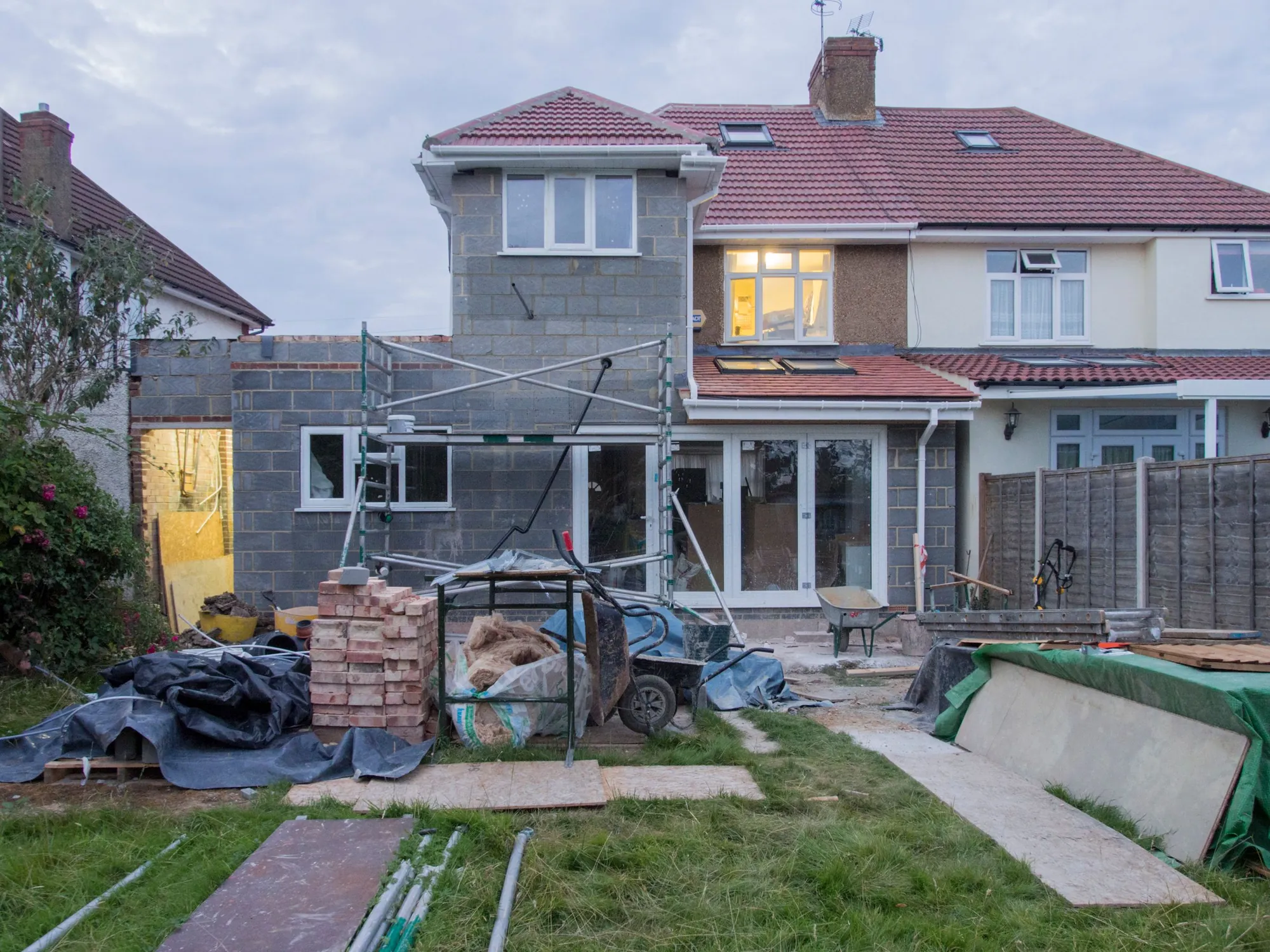
Retrospective planning drawings for work already built, £589 in total
The extension is up, the loft is done, and then the letter arrives. A retrospective application asks the council to grant permission after the event, and it is judged as if the work were not yet built. We survey what exists and draw the case: £439 plus the £150 survey.
- £439 drawings + £150 survey (£589 total)
- Surveyed exactly as built
- Free redraws until approval
What does a retrospective planning application cost?
Our fee is £439 for the drawings and £150 for the measured survey, £589 in total, with no VAT to add. The council’s fee is separate and paid to the council. The survey matters more here than on any other job, because the drawings must show what is actually on the ground, not what was meant to be built.
What the £589 covers
- A measured survey of the finished work, taken to the millimetre
- Plans, elevations and sections of what is built, with the differences from any earlier permission marked
- A site plan, location plan and the forms the council needs
- A short statement setting out why the work is acceptable, in planning terms, for the officer
- Submission and replies to the officer, with free redraws until approval
Is a retrospective application still the right move?
Very often, yes. The Act lets a council grant permission for work already done (section 73A), and the government’s guidance says councils should not take formal action over a breach alone, only where it is expedient (gov.uk). Where the work is acceptable on its merits, a retrospective application ends the problem.
The risk is waiting. The council can decline to consider a retrospective application once it has served an enforcement notice, and you have only one real chance to seek permission after the event. We would rather draw it before a letter becomes a notice.
How long can a council act?
Longer than many owners assume. For building work finished on or after 25 April 2024 the limit is 10 years; for earlier work it is 4 years (enforcement guidance, section 171B). The clock runs from when the work was substantially completed, so dates, receipts and photographs matter.
If the work is old enough, a Lawful Development Certificate may be the better answer than an application, because it proves the work is immune from enforcement. We check the dates at the start: see Lawful Development Certificate drawings.
- Date the work was substantially completed
- Any earlier permission, and what it allowed
- Whether the work is building work or a change of use
What the officer will look at
The same things as for any application: the look of the work, its effect on neighbours’ light and privacy, and the policy of the borough. The difference is that the officer can see the result, so drawings must be exact. We draw from the survey, not from the original plans, and we mark where the work differs from an earlier consent so there is no argument about the facts.
Building control matters too: work built without approval has its own route, which we price as regularisation drawings. The survey is charged once, so doing both costs the drawings fee only the second time.
What the law says about work done without permission
- Section 73A
- A planning application may seek permission for development already carried out, and the permission can take effect from the date the work was done. Town and Country Planning Act 1990, s.73A
- 3 cases
- The section covers work built without permission, work built under a time-limited permission, and work built without complying with a condition. Town and Country Planning Act 1990, s.73A(2)
- 10 years
- The council may take enforcement action within 10 years for operational development substantially completed on or after 25 April 2024. gov.uk, Enforcement and post-permission matters
- 4 years
- The limit stays at 4 years for operational development substantially completed before 25 April 2024, and for a change of use to a single dwellinghouse begun before that date. gov.uk, Enforcement and post-permission matters
- One chance
- A person who has carried out unauthorised development has one opportunity to obtain permission after the event, by a retrospective application or an appeal. gov.uk, Enforcement and post-permission matters
- Not automatic
- The council can decline to determine a retrospective application if an enforcement notice has been issued before it. gov.uk, Enforcement and post-permission matters
- £548
- A householder application costs £548 from 1 April 2026. National fee schedule from 1 April 2026, published by Bradford Council
Retrospective application questions
Can I get planning permission after the work is built?
Yes. Section 73A allows an application for development already carried out, and the permission can take effect from the date it was built.
Will the council make me demolish it?
Not automatically. Councils have discretion and should act where it is expedient, and usually avoid formal action over technical breaches that cause no material harm. We cannot promise an outcome.
How long until the council can no longer act?
For work finished on or after 25 April 2024, 10 years. For earlier work, 4 years.
Does a retrospective application cost more?
A householder application is £548 from 1 April 2026, paid to the council. Our own fee is £439 plus the £150 survey.
What if the council has already sent an enforcement notice?
Tell us at once. The council may decline to consider a retrospective application after a notice, and appeal deadlines run on their own clock. We will tell you which route is open.
Other services people book with this one
- Regularisation drawings£569 drawings + £150 survey (£719 total)
- Lawful Development Certificate drawings£389 drawings + £150 survey (£539 total)
- Householder planning appeal£409
- Householder planning drawings£479 drawings + £150 survey (£629 total)
- Building regulations drawings£479 drawings + £150 survey (£629 total)
Got a letter from the council?
Send it with the address and the date the work was finished. We tell you which route is open and reply with a fixed fee.