- Written by
- The Drawings4Planning technical teamChartered architectural technologists (MCIAT)
- Published
- Updated
- Reading time
- 3 min
- Topic
- Planning permission
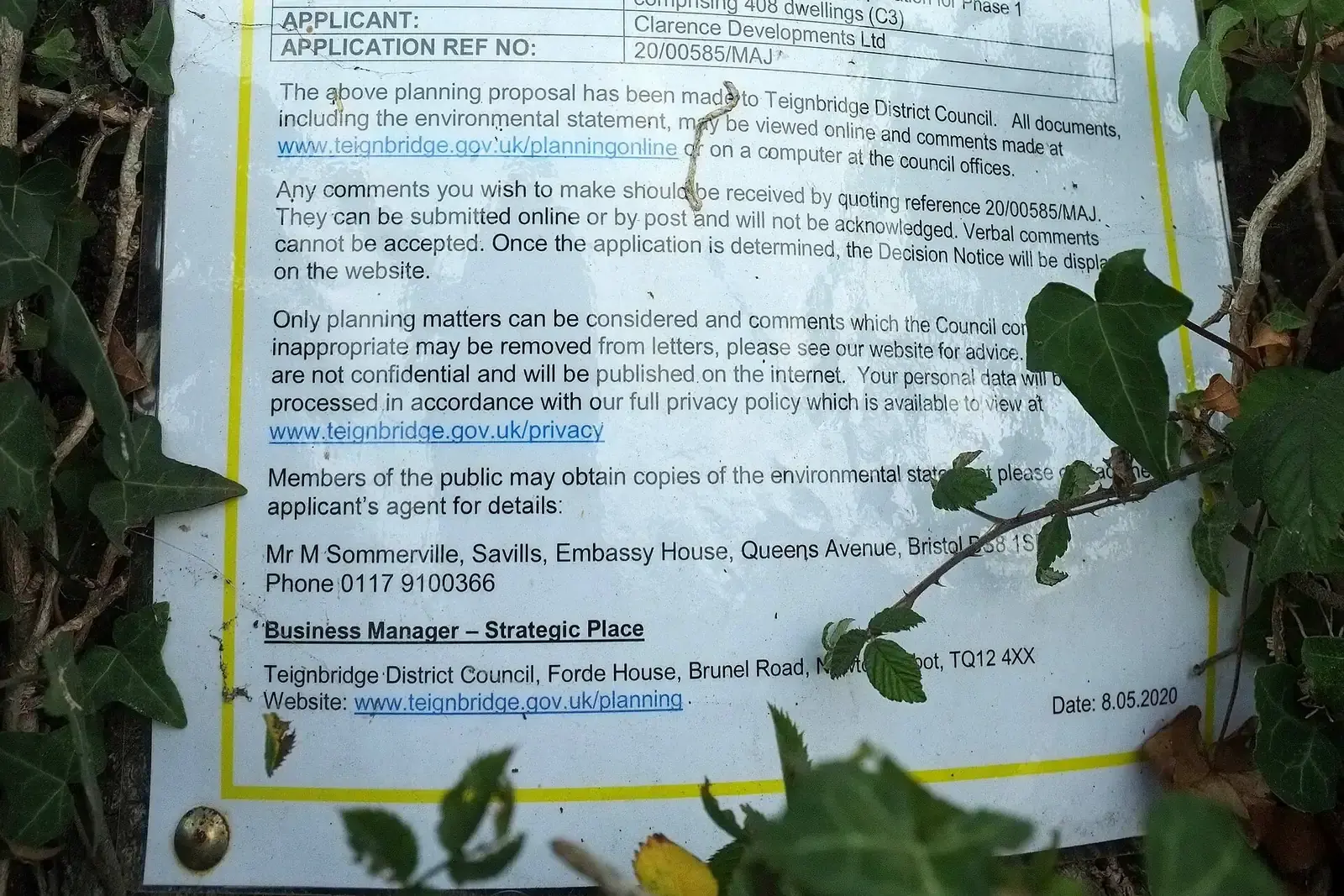
Laminated planning application notice with the council's contact details, partly hidden by ivy on a fence. Photo: Derek Harper, CC BY-SA 2.0.
What do you pay in total?
On a householder scheme, £309 to us plus £89 to the council, so £398. On any other development the council fee is £309, which makes £618. The council fee must be paid at the time the request is made, and cannot be paid afterwards (gov.uk).
The pack covers up to three conditions. We read each condition, work out what the council wants to see, and prepare exactly that, so the request is complete when it lands.
| Condition pack, up to three conditions paid to us | £309 |
|---|---|
| Council fee, householder discharge request paid to the council | £89 |
| Total | £398 |
Total £398: £309 to Drawings4Planning and £89 to the council. A non-householder scheme pays the council £309.
How long will the council take?
It must give notice of its decision within 8 weeks, beginning with the day after it receives the request, or any longer period agreed in writing (gov.uk). If no decision is made within 12 weeks, the council must return the fee.
Those clocks tell you when to plan the build: file early, because the 8 weeks run from the day the council receives the request.
Why must you clear them before starting?
Because development begun before a pre-commencement condition is met would be unlawful, and may be the subject of enforcement action (gov.uk). The permission itself can also lapse: in England it lapses unless development begins within three years, unless the council sets another period (s.91).
So the conditions and the clock interact, and a slow discharge can cost you the permission. We keep a note of the dates for you.
What if the council is slow?
The guidance sets out a deemed discharge route for unreasonable delay, which can be used only after a minimum of six weeks. We explain when it is worth using and when a call to the case officer is the better step.
More than three conditions? Each further condition is quoted before we start, so the price stays fixed.
Where the figures come from
- £89 / £309
- Council fee to discharge conditions: householder / any other development, from 1 April 2026. National fee schedule, published by Bradford Council
- 8 weeks
- The council must notify its decision within 8 weeks, or a longer agreed time. gov.uk, Use of planning conditions
- 12 weeks
- If no decision is made within 12 weeks, the council must return the fee. gov.uk, Use of planning conditions
- Unlawful
- Development begun before a pre-commencement condition is met would be unlawful. gov.uk, Use of planning conditions
- 3 years
- A permission in England lapses unless development begins within three years. Town and Country Planning Act 1990, s.91
Discharge of conditions cost questions
Which conditions need discharging?
Those on your decision notice that ask for details before work starts or before you occupy: materials, drainage, landscaping, a construction plan. We list them and say which come first.
Can I pay the council fee later?
No. The fee is due when the request is made, and it cannot be paid retrospectively.
What if one of the three conditions needs a specialist report?
Then we tell you at the quote. A report such as a tree survey or a flood risk assessment is a separate service, priced before we begin.
Do I need a pack for a condition I disagree with?
Not necessarily. A condition you think is wrong can be varied by a section 73 application, which has its own route and fee.
Full details of the service: Discharge of conditions.