- Written by
- The Drawings4Planning technical teamChartered architectural technologists (MCIAT)
- Published
- Updated
- Reading time
- 3 min
- Topic
- Planning permission
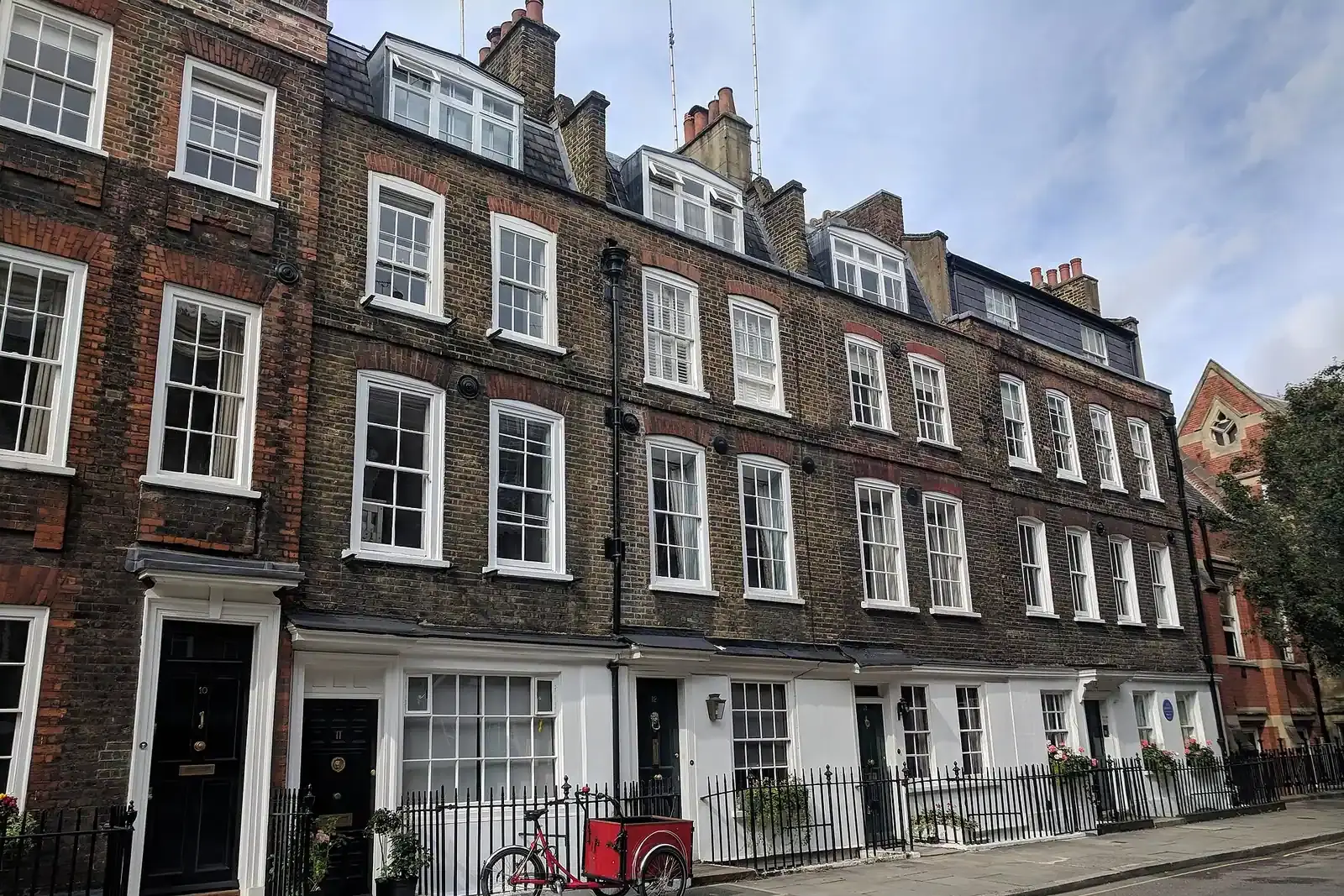
Georgian terrace of dark brick houses with white sash windows, black railings and roof dormers, a red cargo bike parked outside. Photo: Richard Symonds, CC BY-SA 4.0.
What is in the £539?
A written statement of significance for your house and street, and of how your proposal affects it. We research the building and the area, visit the site, then write and illustrate the assessment so a conservation officer can follow the reasoning without a second call. If the council asks for more, we update the statement free.
There is no survey line because the work is research and judgement rather than measurement. If drawings are needed for the same job, those are priced as their own service and the measured survey is added only there.
Why does the council ask for one?
Because the law and national policy tell it to weigh heritage. When it decides an application affecting a listed building or its setting, it must have special regard to preserving the building and its setting (s.66). In a conservation area, special attention must be paid to preserving or enhancing its character or appearance (s.72).
The national policy goes further: a proposal affecting heritage assets should come with an assessment of their significance, including the contribution of their setting, at a level of detail proportionate to their importance (NPPF chapter 20, HE5). That assessment is the statement.
What else does a heritage job pay?
The council side differs by consent. The national fee schedule shows no fee for a listed building consent application (fee schedule), whereas a householder planning application is £548. A job that needs both pays the planning fee and no more for the consent.
Alongside the £539, you may need drawings to show the works. Our planning drawings are £629 with the survey, and a Design and Access Statement for a conservation area or listed building is a further service from £219.
Does a short statement ever do?
Yes, when the effect on the asset is small. The policy asks for a level of detail no greater than is necessary to understand the effect, and it asks the author to consult the historic environment record and use appropriate expertise (HE5).
We scope the statement to the work: a rooflight on a rear slope needs less than a basement under a listed terrace. The fee stays £539 either way, and we say at the quote which depth your job needs.
Where the figures come from
- HE5
- Proposals affecting heritage assets should be accompanied by an assessment of significance, including the contribution of setting. NPPF chapter 20, policy HE5
- Proportionate
- The level of detail should be proportionate to the importance of the assets and no more than necessary. NPPF chapter 20, policy HE5
- s.66
- The council must have special regard to preserving a listed building or its setting. Planning (Listed Buildings and Conservation Areas) Act 1990, s.66(1)
- s.72
- In a conservation area, special attention must be paid to preserving or enhancing its character or appearance. Planning (Listed Buildings and Conservation Areas) Act 1990, s.72(1)
- No fee
- The national fee schedule lists no current fee for a listed building consent application. National fee schedule, published by Bradford Council
- £548
- Council fee for a householder planning application, from 1 April 2026. National fee schedule, published by Bradford Council
Heritage statement cost questions
Do I need a heritage statement for every conservation area job?
Not always. Each council publishes its own list of what it needs to validate an application, so the answer varies by borough and by the work. We check your council’s list before you commit.
Source: NPPF chapter 20, policy HE5
Is the council fee higher for a listed building?
No separate fee exists for listed building consent in the schedule we checked, so any council fee comes from the planning application that goes with it.
Can you write the statement and draw the scheme?
Yes. The two are priced separately so you can see each cost, and the same team keeps the drawings and the statement consistent.
Who signs the statement?
It is written by our technical team, chartered architectural technologists (MCIAT). If your job needs a specialist historian or a structural opinion, we say so at the quote.
Full details of the service: Heritage statements.