- Written by
- The Drawings4Planning technical teamChartered architectural technologists (MCIAT)
- Published
- Updated
- Reading time
- 3 min
- Topic
- Building regulations
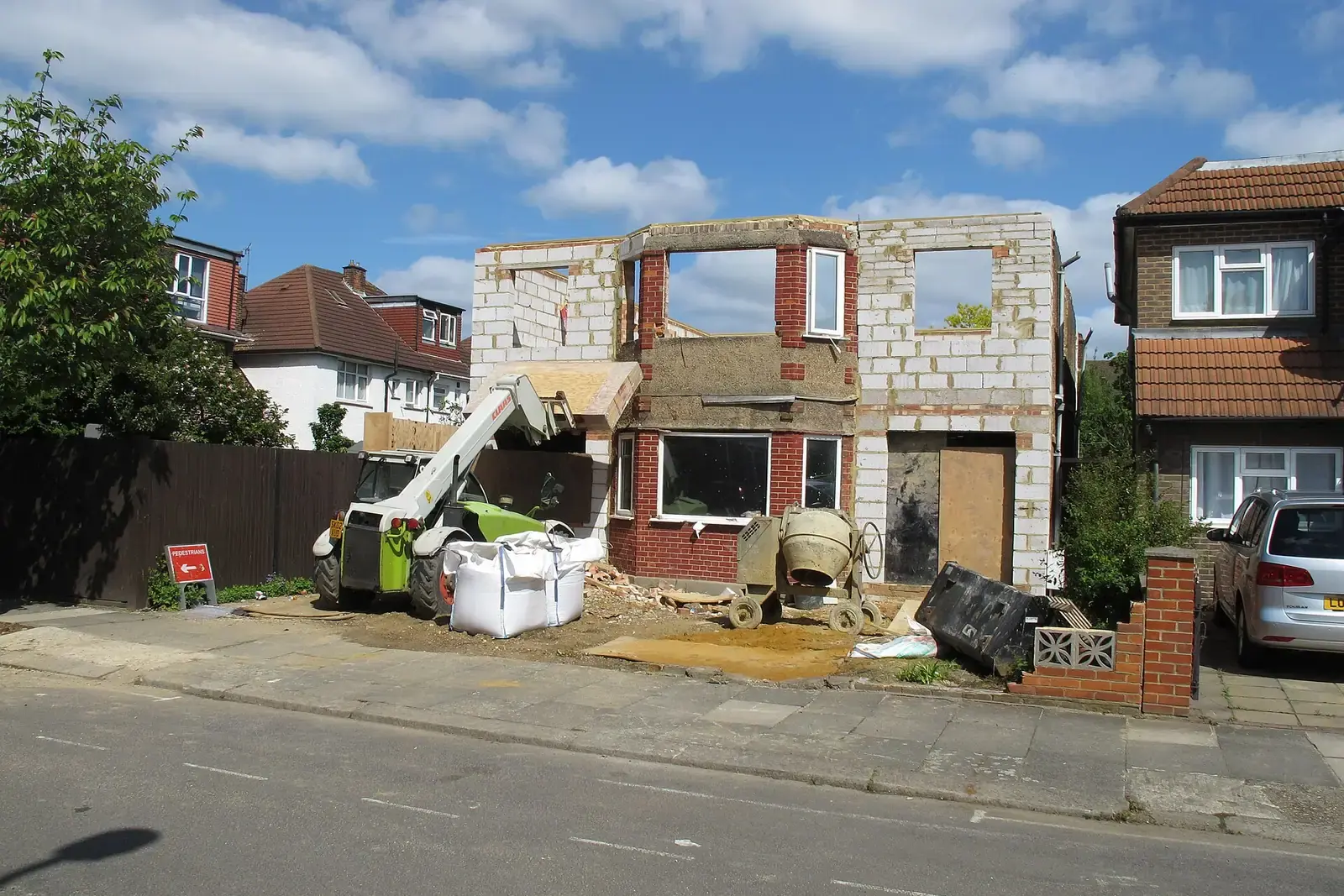
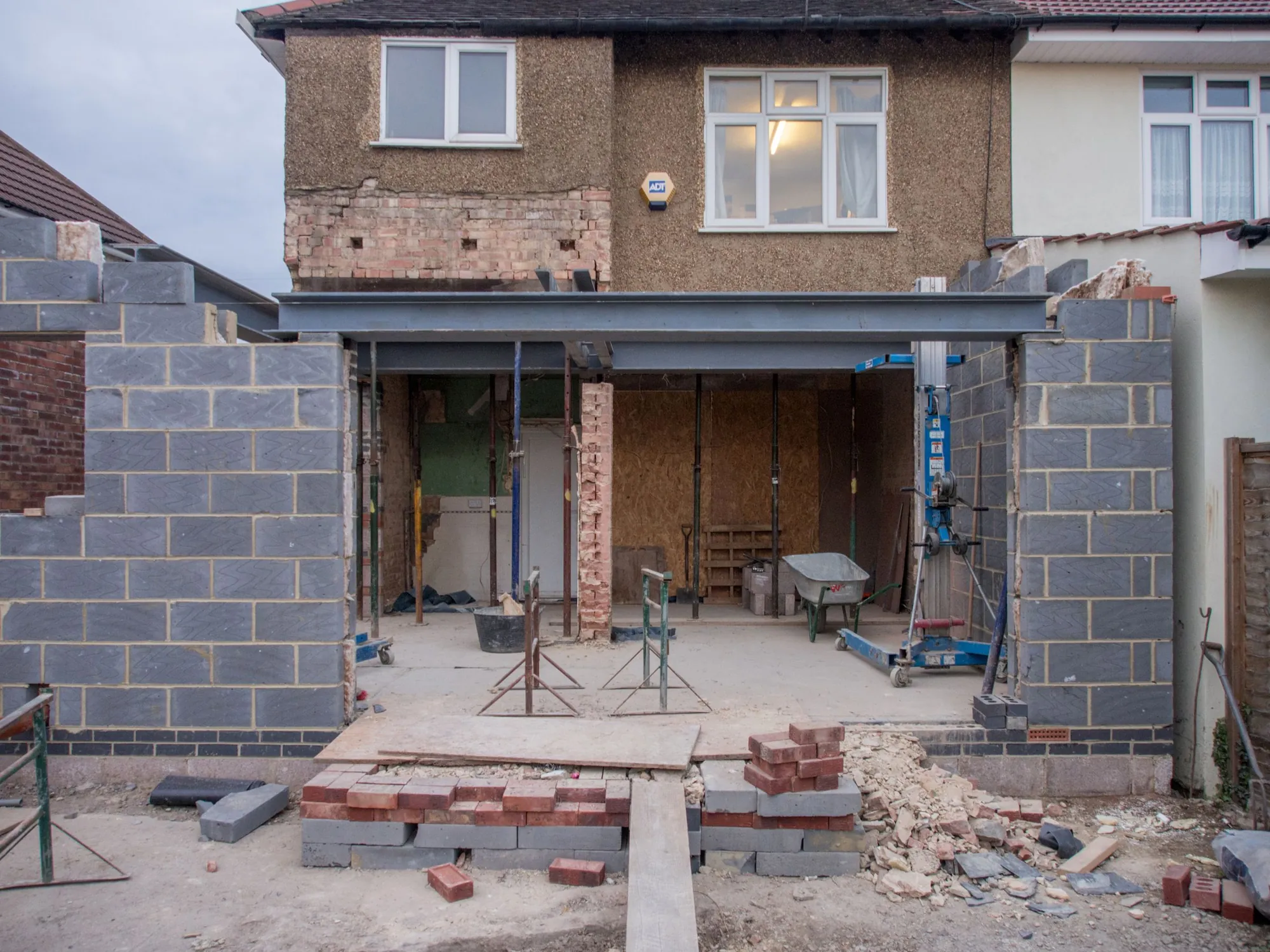
Two-storey extension shell in white blockwork with open window holes beside a semi-detached house, a cement mixer and telehandler in front. Photo: David Hawgood, CC BY-SA 2.0.
What do you get for £719?
A record of what is actually built, prepared in the form building control asks for. We measure the building ourselves, draw the unauthorised work as it stands, and write the statement and description the regulations require. Where more work is needed to make it comply, we draw that too.
That is one fixed fee. The £150 survey sits inside it, and it is charged once for the house, so if you also need planning drawings for the same visit, the second set shows its drawings fee only.
| Regularisation drawings and statement paid to us | £569 |
|---|---|
| Measured survey of the work paid to us | £150 |
| Total | £719 |
Total £719 to Drawings4Planning. Building control’s inspection and certificate fee is paid to it, separately.
What does building control charge?
Its own fee, and it varies. Local authorities base their fees on their costs, and the amount depends on the type of work, the inspections needed, the number of dwellings and the floor area (gov.uk). We cannot predict it, so ask the council for a written charge as soon as you decide to regularise.
Regularisation is only available from a local authority building control body, not from a private approver (gov.uk). That is the one place you have no choice of provider.
What happens after the drawings go in?
The council decides whether the work complies. It can ask you to open up the work, carry out tests or take samples first (regulation 18), and you might need to make alterations before it agrees the work complies. If it is satisfied, it issues a regularisation certificate.
The certificate is evidence of compliance but not conclusive evidence (regulation 18). It is still the document that closes the gap for most people, because without approval you will not have the certificates of compliance you may need when you sell (gov.uk).
Why not wait?
Because the council can act on defective work for a long time. It may serve a notice requiring removal or alteration of offending work within 10 years of its completion, and if you do not comply within 28 days it may do the work itself and recover the cost (Building Act 1984, s.36).
Someone doing work that breaks the regulations can also be prosecuted and fined, and may be made to pay to fix faulty work (gov.uk). Regularising early costs less than any of these.
Where the figures come from
- 11 Nov 1985
- Regularisation covers unauthorised building work carried out on or after this date. Building Regulations 2010, regulation 18
- Local authority only
- Regularisation is available from the local authority building control body only. gov.uk, How to apply for building regulations approval
- Opening up
- The authority may ask for work to be opened up, tested or sampled before it decides. Building Regulations 2010, regulation 18
- Not conclusive
- A regularisation certificate is evidence of compliance, but not conclusive evidence. Building Regulations 2010, regulation 18
- 10 years
- The council may require removal or alteration of offending work within 10 years of its completion. Building Act 1984, s.36
- 28 days
- After 28 days without compliance with a section 36 notice the council may do the work and recover the cost. Building Act 1984, s.36
- By cost
- Local authorities base building control fees on their costs. gov.uk, How to apply for building regulations approval
Regularisation cost questions
Do I need planning permission as well?
Possibly. Regularisation answers building regulations only. If the same work also needed planning permission, a retrospective planning application is a second, separate step with its own fee.
Will the council make me knock it down?
It might ask for alterations, or for parts to be opened up and tested, before agreeing that the work complies. The drawings show what needs to change, so the cost is known before work starts.
Can a private approver regularise work for me?
No. Government guidance says regularisation is available from the local authority building control body only.
Source: gov.uk, How to apply for building regulations approval
I bought the house with the work already done. Does this still apply?
Yes. The test is the date of the work, not who did it: regularisation covers unauthorised work carried out on or after 11 November 1985.
Full details of the service: Regularisation drawings.